

Key Takeaways
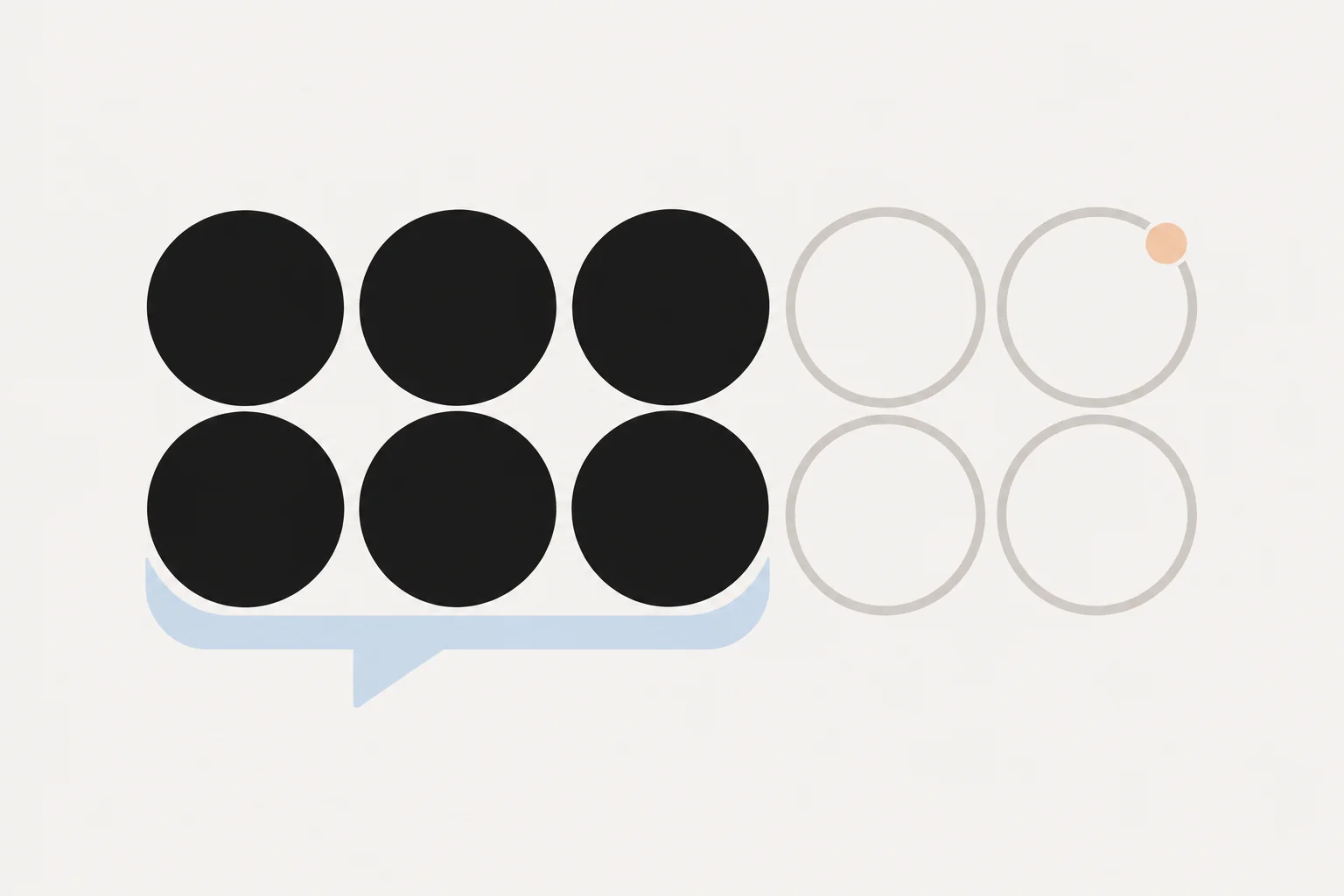
- AI knows almost every local business: A September 2026 study of 8,016 local businesses found that AI assistants knew 99.1% of them.
- But 4 in 10 never get recommended: 40.3% of those businesses were not recommended for a single one of their services.
- The phone number is wrong about half the time: When a business publishes its phone number, AI gets it right only 53.2% of the time.
- You can check and fix this yourself: We'll walk through 5 steps that take about 30 minutes.
If you ask ChatGPT about your business by name, it probably knows who you are. It can tell you what you do and roughly where you work.
But that isn't how your customers use it. They ask something like, "Who should I call to replace a water heater in Canton?" They don't type a business name. They type the job and the town.
So the real question is whether ChatGPT brings up your business when someone asks for the work you do. For a lot of local businesses, it doesn't. A new study shows how big that gap is. We'll go through what it found and what you can do about it.
What does the new data say?
A company called Insites checked how seven AI assistants handle local businesses. They looked at 8,016 businesses in September 2026 and published the results on September 29. The assistants were ChatGPT, Gemini, Copilot, Perplexity, Grok, Google AI Overviews, and Google AI Mode.
Here are the numbers that matter most:
| What Insites checked | Result |
|---|---|
| Businesses that AI knew in at least one assistant | 99.1% |
| Businesses that were never recommended for any of their services | 40.3% |
| How often ChatGPT knew a business by name | 96.0% |
| How often ChatGPT recommended that business | 27.8% |
| How often AI gave the right phone number | 53.2% |
| Businesses with a wrong name, website, or phone number in at least one assistant | 94.3% |
| Share of AI's sources that were the business's own website | 13.2% |
Source [1]
A quick note on the source. Insites sells audit software, so they benefit when businesses worry about this, and nobody else has repeated the study yet. We still think the numbers are useful because the sample is large. You can also test the main finding on your own business in a few minutes, and we'll show you how below.
What's the difference between being known and being recommended?
The study ran two kinds of tests.
In the first test, they asked the assistant about a business by name. That tells you if the AI knows the business exists. Almost every business passed. AI knew 99.1% of them.
In the second test, they asked for a service in a town without naming any business. That tells you if the AI recommends the business. This is where things fell apart. 40.3% of businesses were never recommended for any of their services.
ChatGPT had the biggest gap. It knew a business by name 96.0% of the time, but it recommended that business only 27.8% of the time.
So being known isn't the hard part anymore, because almost everyone is known. The hard part is getting named when a customer asks for the job.
Why does ChatGPT skip your business?
The study doesn't give a reason for each business that got skipped. But think about what the AI has to do. To recommend you, it has to match your business to a specific job in a specific town. It also needs something it can point to as the reason.
That usually breaks down in one of four places:
- Your services are described too broadly. Your site says "plumbing services," but the customer asked about a tankless water heater.
- Your service area isn't written down. If no page says you work in that town, the AI won't assume that you do.
- Your reviews don't mention the work. "Great company" doesn't help much. "They replaced our water heater the same day" gives the AI something to repeat.
- Other websites describe you better than your own website does.
That fourth one shows up in the data. Only 13.2% of the sources AI used about a business were the business's own website. The rest came from directories, review sites, and listings. In other words, most of what AI says about you comes from pages you didn't write.
AI gets the phone number wrong about half the time
This is the part of the study that surprised us the most.
When a business publishes its phone number, AI gave the right number only 53.2% of the time. And 94.3% of businesses had a wrong name, website, or phone number in at least one assistant's answer.
That second number sounds scary, but keep it in perspective. It counts any mistake in any of the seven assistants, so almost every business is going to have at least one.
The phone number is the one to worry about. If a customer gets your name from ChatGPT and then calls a number that doesn't work, they won't go looking for the right one. They'll call the next business on the list.
So where do the wrong numbers come from? Usually they're old numbers. It might be a tracking number that an old marketing company put on a directory. It might be a line you stopped using three years ago. The AI finds it, and it has no way to know the number is out of date.
See What AI Says About Your Business
The free scan takes about two minutes and shows how you come up in ChatGPT and Google's AI.
5 steps to get your business recommended
The good news is that you can check all of this yourself. It takes about 30 minutes, and you don't need any special tools.
1. Ask the question your customers ask
Pick your three most important services. For each one, open ChatGPT and type: "Who should I call for [service] in [town]?" Write down which businesses it names and what it says about them.
We recommend starting with ChatGPT. According to BrightEdge, ChatGPT sent 95.1% of all AI referral traffic in August 2026. Gemini sent 2.4%, Perplexity sent 1.1%, and Claude sent 0.8%.[2]
Two things to know about that number. BrightEdge didn't share how many websites they looked at or how they measured it. And it's the share of visits that come from AI assistants, not the share of all your website traffic.
After ChatGPT, ask the same questions in Google. Google shows its AI answers right in the search results, so your customers can read them without clicking on anything.
2. Ask for your own phone number
Next, ask each assistant: "What's the phone number for [your business name] in [town]?"
If it gives the wrong number, write down which assistant it was. A lot of the time it will also show the page where it found the number, and that tells you what to fix.
3. Fix your listings
You can't change what the AI says directly. But you can fix the pages it reads.
Go through your Google Business Profile, Bing Places, Apple Maps, Yelp, and Facebook. Then check the two or three directories that matter most in your trade. Your business name, phone number, and website should be exactly the same on every one.
Pro tip: Start with the listing where the AI found the wrong number. That's the one most likely to be costing you calls.
4. Give every service its own page
Remember that only 13.2% of AI's sources were the business's own website. You want your website to be the clearest source there is about your business.
The simplest way to do that is to give each service its own page. A single "Services" page with a list of bullet points is hard for AI to match to a specific question. A short page about water heater replacement that lists the towns you serve is much easier to match.
That's a lot of pages to write by hand. It's one of the reasons we build every AI local business website with a page for each service and each town from the start.
5. Check again next month
AI answers change all the time. Your listings get updated, new reviews come in, and your competitors make changes too. So one check only tells you where you stand today. If you ask the same questions every month, you'll see whether your fixes are working.
If you don't want to do this by hand, Pantora's AI visibility tracking asks ChatGPT and Google's AI your customers' questions every week and shows you who came up. It covers those two assistants, not all seven from the study.
Can anyone guarantee that ChatGPT will recommend you?
No. Nobody controls what ChatGPT says, and you should be careful with anyone who promises that they do.
What you can control is how clear and consistent your information is. That means a page for each service, the right phone number on every listing, and reviews that mention the work you did. Those are the things AI has to work with when a customer asks who to call.
If you'd like help with that, Pantora is local business marketing software that builds your website, answers your calls, and tracks how AI talks about your business.