

Key Takeaways
- Most contractors see AI as relevant: 77% of contractors say AI is relevant to their industry, and 52% are actively engaged with it.
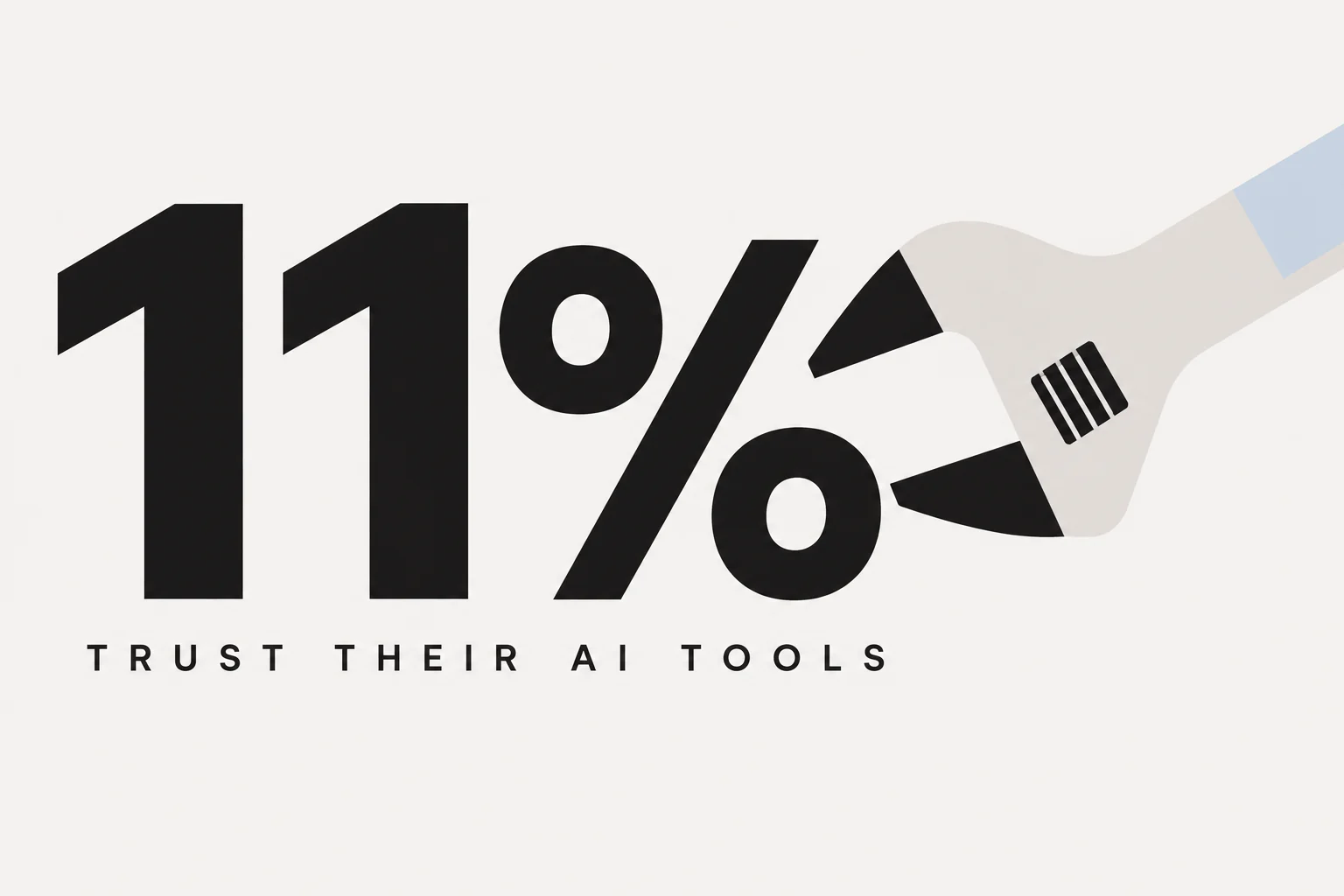
- Very few trust it: Only 11% have high or complete trust in the AI tools they use.
- AI saves time, but it doesn't always make money: 66% of AI users save at least three hours a week, but fewer than half say their revenue or profit went up.
- Contractors want fewer tools: 61% of AI users prefer AI that's built into the software they already use.
It seems like every software company is adding AI to its product right now. But how are contractors using it, and is it working for them?
ServiceTitan just published a survey that helps answer that. They asked 1,017 contractors across the U.S. how they use AI and what they think of it.
We read the report and pulled out the five findings that matter most if you run a home service business. For each one, we'll share what we think you should do about it.
Where does the data come from?
The report is called The Update: 2026 State of AI in the Trades. ServiceTitan released it on September 29.
A research firm called Thrive Analytics ran the survey from May 26 to June 15, 2026. They surveyed 1,017 residential and commercial contractors in HVAC, plumbing, electrical, roofing, garage doors, pest control, landscaping, and fire and life safety. The margin of error is 3.7 points.
Keep two things in mind as you read. ServiceTitan sells software to contractors, so they have a reason to be optimistic about AI. And the survey was done in early summer, so it's a few months old. It's still a large survey, and it covers most of the major trades.[1][2]
Takeaway #1: 77% of contractors say AI is relevant to their trade
Most contractors have made up their minds that AI matters. 77% now say it's relevant to their industry.
More of them are using it, too. ServiceTitan reports that active engagement with AI went from 46% in December 2025 to 52% in this survey.
So if you've been trying out AI tools, you're in the majority. And if you haven't started yet, you're not far behind, because almost half of contractors are in the same spot.
What to do: You don't need a big AI plan. Pick one task that eats your time every week, like replying to reviews or following up on estimates, and try AI on that one task first.
Takeaway #2: Only 11% of contractors trust their AI tools
This was the most surprising number in the report for us. Only 11% of contractors place high or complete trust in the AI tools they use, and 58% say they have little or no trust.
So why is trust so low? The survey asked contractors what gets in the way:
- 44% said they don't understand how to use AI in their business
- 43% said there's a lack of clear use cases
- 40% said integrating AI with their existing software
That makes sense to us. A general AI tool doesn't know your service area, your prices, or the jobs you don't take. If it gets something wrong in a message to a customer, your name is on it.
Our advice is to treat AI the way you'd treat a new hire. You wouldn't give a new employee the keys on day one. You'd check their work for a while, and you'd check less as they earned it.
So look for AI tools that let you do the same thing:
- You can see the work before it goes out. Drafts should wait for your approval.
- It uses your real business information, like your services, your towns, and your reviews.
- You can undo it if something goes wrong.
The survey backs up the second point. 38% of contractors said they'd use AI more if it was trained on trade-specific data.
That's how our AI local business website automation works. Pantora drafts a change to your website, the change waits in your inbox with a plain explanation, and nothing goes live until you approve it.
Takeaway #3: 66% of AI users save at least three hours a week
Now for some good news. Among contractors who use AI, 66% save at least three hours every week.
But there's a catch. Fewer than half of those users say their profitability improved (47%) or their revenue went up (43%).
Why the gap? Saving time only makes you money if you spend that time on paid work. If AI saves you three hours of paperwork and those hours go to other paperwork, your revenue doesn't change.
What to do: When you decide where to use AI, look for tasks that are tied to winning a job, not only tasks that save time. The next takeaway shows where contractors are finding those.
See What Customers Find When They Look You Up
The free scan takes about two minutes and shows how your business comes up on Google and in AI answers.
Takeaway #4: Hiring and after-hours calls are the top reasons contractors try AI
The survey asked contractors why they started experimenting with AI. These were the top three reasons:
- Difficulty hiring and the workforce gap (37%)
- Providing off-hours support (34%)
- Reducing operating costs (33%)
The second reason is worth a closer look because it's tied directly to revenue.
Think about a call that comes in at 7pm while you're finishing a job. If nobody answers, that customer will probably call another company. If something answers, finds out what they need, and sends you the details, you still have a shot at the job.
Pro tip: If you only try AI in one place, try it on missed calls and after-hours calls. You'll know quickly whether it's bringing in work, because you can count the leads.
Takeaway #5: 61% of AI users want it built into the software they already use
Contractors don't want more tools. 61% of AI users said they prefer AI that's built into their core platform. And as we saw above, 40% of contractors named integration as a barrier.
This makes sense when you think about how separate tools work. Each one is another login and another monthly bill. They also don't share information. The tool that writes your review replies doesn't know that the same customer called twice last week.
What to do: Before you add a new AI tool, check whether the software you already pay for can do the job. And if you're shopping for something new, like HVAC marketing software, ask whether the AI is part of the product or a separate add-on.
What does this mean for your business?
Here's the short version. Most contractors are already trying AI. It saves them time, but it only pays off when it's tied to winning jobs, and most owners don't fully trust it yet.
You don't have to figure it all out at once. Start with one task, keep a human check on it, and pick tools that work with what you already have.
If you want to see what that looks like, Pantora is local business marketing software that builds your website, answers your calls, and follows up on your leads. The AI does the work, and you approve it from one inbox.