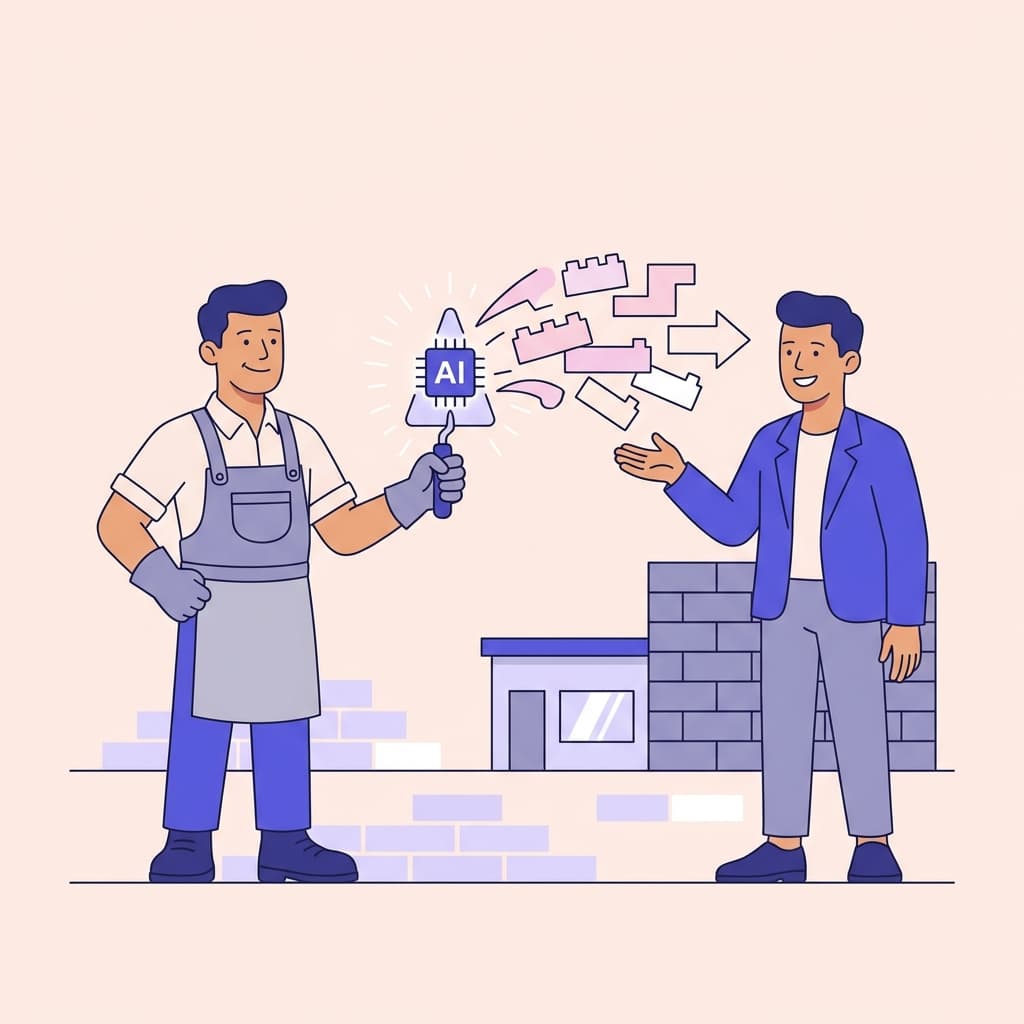
A homeowner notices white, dusty mortar on the driveway and a stair-step crack creeping along the brick veneer. They’re not “shopping masonry” for fun, they’re trying to figure out if the wall is failing, what it might cost, and who won’t make it worse with the wrong mortar mix. The twist is they may not start on Google the way they used to. More and more, they ask ChatGPT, Google AI, or Perplexity something like: “Best tuckpointing company near me?” or “Who fixes chimneys and guarantees the work?”
If you want more masonry leads, you need your business to be easy for AI to recommend with confidence, not just list. That’s exactly the problem Pantora is built to help solve, making sure your shop shows up in the new “AI answers” moment that’s replacing a lot of scrolling and calling around.
Where AI-driven masonry leads actually come from
Most AI leads for masons come from a handful of prompt patterns. You’ll recognize these from real customer calls, AI is just the new “front desk” they talk to first:
- Problem diagnosis prompts: “Why is my mortar crumbling?” “Is efflorescence serious?” “Cracked brick, repair or replace?”
- Specialist prompts: “Who does tuckpointing near me?” “Need a mason for a retaining wall.” “Stone veneer installer in [city].”
- Trust-and-risk prompts: “Who won’t damage historic brick?” “Best mortar for a 1920s home?” “Who warranties chimney repair?”
- Budget prompts: “How much does tuckpointing cost?” “Cost to rebuild a chimney crown?” “Stone facade price range.”
AI answers are assembled from signals it can find and cross-check, your local listings, your website, your review language, photos, and consistency across directories. When those signals are thin or contradictory, the AI plays it safe and recommends someone else.
Is AI Recommending Your Business?
See how you stack up against your competitors and let Pantora get you to the top.
Make your business “easy to verify” (the local signals AI leans on)
Before you write a single new blog post, fix the basics that tell AI (and homeowners) you’re a real, active, accountable masonry contractor.
Lock down your Google Business Profile like it’s a sales page
For masonry, your Google Business Profile (GBP) often matters more than your homepage because it’s where people (and AI) look for proof fast.
Focus on:
- Categories that match what you want to sell. If you do chimney repair and tuckpointing, don’t hide behind a vague category that makes you look like a general handyman.
- Service areas that reflect reality. List the towns and neighborhoods you actually work in, especially if your work is seasonal (spring through fall) and scheduling matters.
- Services list with your money jobs. Add specifics like brick repair, tuckpointing, chimney repair, retaining walls, stone installation, and concrete block work.
- Fresh photos that show craft. Before/after mortar joints, chimney crowns, flashing details, stone layout progress, and finished elevations. Stock images don’t help you get picked.
- Hours and seasonal notes. Mortar needs moderate temperatures to cure well. If you slow down in cold weather, say how you handle estimates, scheduling, and temporary protection.
Get obsessive about consistent business info (NAP)
AI cross-references your name, address, and phone across your website, GBP, Facebook, and directories. If one listing has an old phone number or a slightly different business name, you look unreliable.
For a trade with an aging workforce and tight availability, reliability is the sale. Remove anything that introduces doubt:
- Duplicate listings
- Old addresses from when you rented a shop
- Multiple phone numbers floating around
- Different spellings (“&” vs “and”) across profiles
Build proof that you understand materials (not just “we do brick”)
Masonry is one of the oldest construction methods, but it’s also an easy one to mess up if a contractor uses the wrong approach, especially on older brick.
On your site and listings, be explicit about:
- Material expertise: brick types, stone types, mortar matching, joint styles, repointing vs tuckpointing
- Structural awareness: what you inspect (movement, water entry, freeze-thaw damage)
- Workmanship warranty: simple, clear language about what you guarantee and for how long
That “wrong mortar mix damages old bricks” fact is not trivia, it’s a trust differentiator. Homeowners ask AI about it because they’re worried about hiring the wrong person.
If you want the deeper framework for showing up in AI answers, start with AEO for masonry. It’ll connect the dots between local SEO, your website content, and what AI tools cite.
Reviews that win masonry jobs (what to ask for and when)
Masonry is visual and long-lasting. That means reviews work best when they include detail, what was failing, what you fixed, and how it looks now.
Ask at the moment the homeowner sees the transformation
The best time is not when you send the invoice. It’s when they walk outside and see:
- mortar joints crisp again after tuckpointing
- a rebuilt chimney that looks straight and finished
- a retaining wall that finally makes the yard usable
Send a simple text:
- “Glad you’re happy with how the brick repair turned out. Would you mind leaving a quick review? It helps neighbors find us: [link]”
Nudge for specifics that AI can understand
“Great mason” is nice, but it doesn’t teach AI what you’re known for.
Prompt them lightly:
- “If you mention what we helped with (tuckpointing, chimney repair, stone installation), it helps people looking for the same work.”
Respond like a contractor who stands behind the work
Owner responses are a quiet signal that you’re active and accountable, especially when homeowners ask AI “who’s reputable?”
In your replies, weave in:
- the service performed (“tuckpointed the south elevation and replaced cracked bricks around the window lintel”)
- the outcome (“stopped water intrusion and matched the existing joint profile”)
- the warranty/next steps (“reach out if you ever see joint separation; we stand behind our workmanship”)
Website content AI can “quote” (without turning you into a writer)
You don’t need 50 blog posts. You need a handful of pages that match how homeowners ask questions, and that show you’re qualified for jobs typically priced in the $500–$5,000 range.
Create focused service pages for your core profit work
A single “Services” page with a bullet list doesn’t help AI (or customers) choose you. Build real pages for the work you want more of, such as:
- Tuckpointing / repointing
- Brick repair and replacement
- Chimney repair (crown, cap, flashing, rebuilds)
- Stone installation (facades, veneers, steps)
- Retaining walls
- Concrete block work
On each page, include:
- Symptoms: what customers notice (crumbling mortar, spalling brick, leaning chimney, loose stones)
- Why it happens: water entry, freeze-thaw cycles, settlement, incompatible mortar
- Your process: inspection, mortar matching, joint prep, cure/protection steps
- What affects price: access/scaffolding, height, extent of damage, matching complexity
- FAQ section: short, direct answers AI can reuse
Publish a “pricing expectations” page with honest ranges
Homeowners ask AI for cost constantly. If you refuse to talk about pricing, you force them to trust a competitor who will.
Good masonry-specific topics:
- “Tuckpointing cost in [City]: what changes the price?”
- “Chimney repair cost: crown vs rebuild vs flashing”
- “Stone veneer installation cost: material and labor factors”
- “Retaining wall cost: block vs natural stone vs drainage needs”
Tie it back to outcomes. One key fact you can responsibly share: tuckpointing can extend a wall’s life 25+ years when done correctly. That frames the job as protection, not cosmetic upsell.
Add seasonal guidance (masonry is not year-round the same way)
AI answers often include “when should I do this?” Make it easy:
- Explain that spring through fall is ideal for most exterior masonry.
- Mention that mortar needs moderate temperatures to cure.
- Address what you do during shoulder seasons: tenting, heaters (if applicable), scheduling estimates, and how you prevent rushed work.
This kind of clarity makes you easier to recommend when AI is comparing multiple contractors.
A “do this in 7 days” plan to get more AI-driven masonry leads
If you want traction without a months-long marketing project, follow this order:
- Choose two services to feature this month (example: tuckpointing + chimney repair).
- Update GBP services and description to match those exact phrases.
- Add 10 new project photos (close-ups of joints, before/after, and one wide shot per job).
- Build or upgrade one page per service with a short FAQ (5–8 questions).
- Request 5 reviews from recent customers and ask them to mention the specific job.
- Check how AI describes you right now (your business name + “tuckpointing” + your city). Note what it gets wrong or can’t find.
- Fix the gaps, missing service area detail, thin proof, inconsistent business info.
If you want a faster way to see where you’re strong and where you look invisible, Pantora can help you spot what AI tools are actually pulling in (and what they’re not).
For broader context on how consumers are using AI to find local businesses, this is worth reading: 2026 AI Search Report: How Americans Are Using AI and What It Means for Your Business.
Why you’re not getting picked (even if your work is excellent)
Masons lose AI-driven leads for the same reason they lose “quick quote” calls: the homeowner can’t confirm you’re the right fit fast enough.
Common issues:
- You look like a general contractor, not a masonry specialist. Your site doesn’t clearly separate brick repair vs tuckpointing vs chimney work vs stone.
- Not enough visual proof. Masonry is a portfolio trade. If your photos are old, few, or low quality, AI and customers assume you’re not active.
- No material reassurance. Older homes need the right mortar. If you never mention matching and compatibility, you’ll lose the “historic brick” searches.
- Stale reviews. A strong review profile from three years ago doesn’t signal current availability and consistency.
- Unclear service area and scheduling. If customers can’t tell whether you work in their town, or whether you can estimate this week, they move on.
If you’re specifically focused on being recommended inside ChatGPT results, this guide is a good next step: get your masonry business on ChatGPT.
The goal: become the “safe recommendation” in AI answers
Homeowners aren’t just searching for “a mason.” They’re searching for someone who won’t make their brick worse, who understands water and movement, and who will stand behind the repair. When your online footprint shows portfolio proof, material competence, consistent local information, and reviews that mention the exact work you do, AI tools have what they need to recommend you confidently.
If you want help tightening up how your masonry business appears across AI search experiences, Pantora is designed to make that visibility measurable, and fixable.